
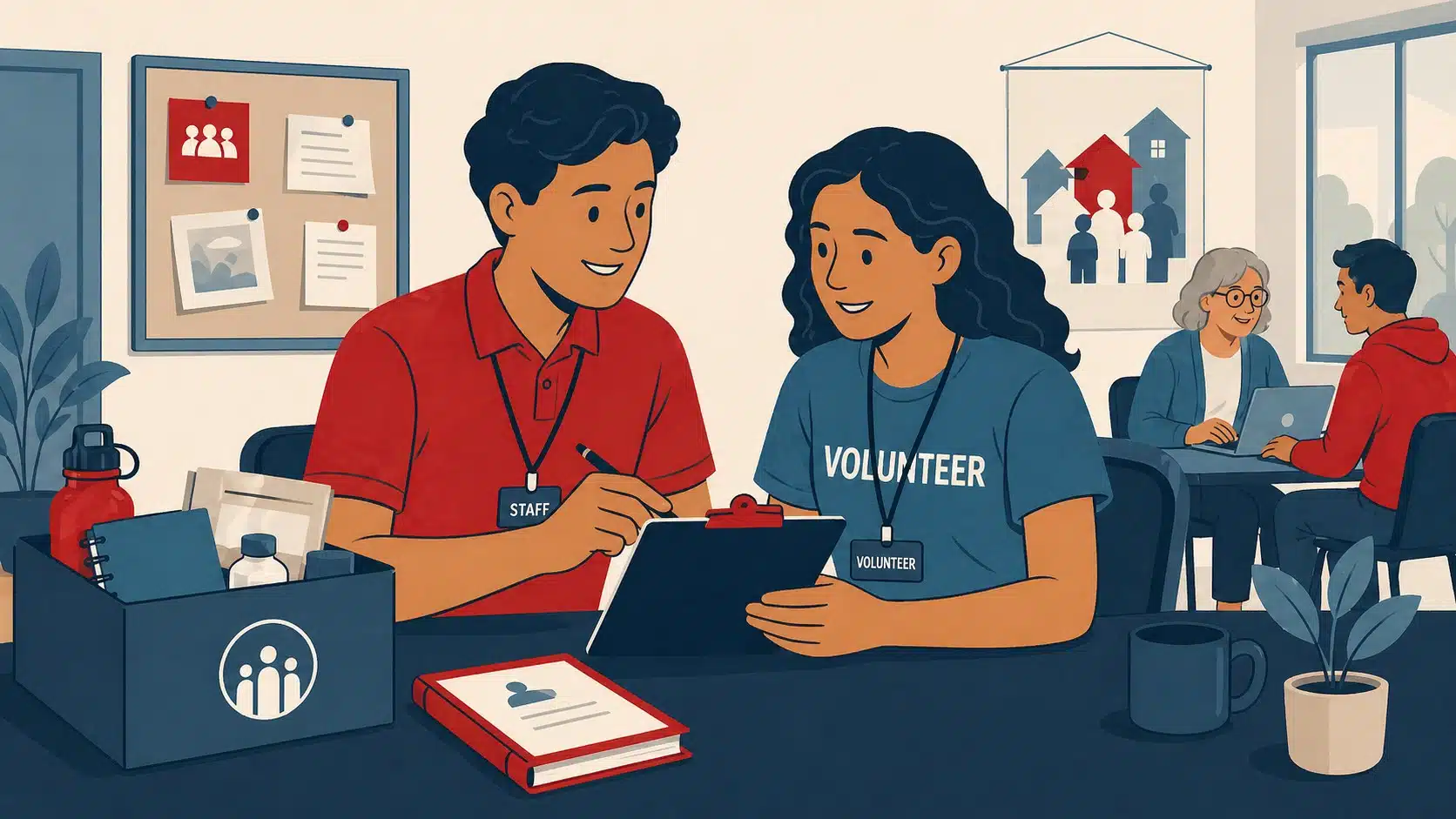
Nonprofits rely on volunteers every single day. In many organizations, they are part of the heartbeat of the mission. They show up, they care deeply and they often go far beyond what anyone expected.
That is the good news.
The harder truth is that many nonprofits blur the line between volunteers and employees without meaning to. It happens slowly. A volunteer becomes indispensable. Hours become more regular. Expectations become firmer. Responsibilities expand. Before long, the arrangement no longer feels quite as informal as everyone tells themselves it is.
That is where nonprofits can get into trouble.
This matters because the nonprofit sector is not small. Statistics Canada reported that nonprofit organizations employed 2.5 million people in 2021, representing 14.5% of all jobs in Canada. When so much of the sector depends on both paid staff and volunteers, role clarity is not a side issue. It is a governance, risk and HR issue.
Why This Gets So Murky in Nonprofits
In a mission-driven organization, people often pitch in wherever needed. That is part of the culture. It can also be part of the problem.
Nonprofits are frequently trying to do more with less. Budgets are tight. Teams are lean. The work matters. So when a volunteer is capable, committed and available, it can be tempting to keep handing them more responsibility. Sometimes that feels efficient. Sometimes it even feels necessary.
But good intentions do not create good structure.
When organizations stop being clear about who is a volunteer, who is an employee and what expectations apply to each, they open the door to confusion, inconsistency and avoidable risk.
For nonprofits trying to create more structure around roles, accountability and people practices, HR consulting for nonprofits can help bring clarity before these issues become bigger problems.
Why the Label Alone Is Not Enough
One of the biggest mistakes organizations make is assuming the label settles the issue. It does not.
Ontario’s guidance on employee status makes the point clearly: the true nature of the relationship matters more than the title attached to it. Separately, the CRA notes that a person who gives services as a volunteer to a charity or public institution is generally not considered an employee. That sounds straightforward, until real life gets involved.
Because in real life, arrangements evolve. A volunteer may start out helping occasionally, then end up with ongoing duties, regular hours, reporting relationships, sensitive access or responsibilities that are central to the operation. That does not automatically make them an employee in every case. It does mean the organization should stop and ask harder questions.
If the structure looks muddled, it probably is.
Where Nonprofits Commonly Get Into Trouble
1. Volunteers doing work that looks just like employee work
This is one of the most common problems. A volunteer ends up covering reception, helping with administration, coordinating events, managing outreach or taking on regular operational tasks that are critical to the organization. Over time, there is little practical difference between what that person is doing and what a paid staff member might do.
That does not mean volunteers cannot contribute meaningfully. Of course they can. But when the work becomes regular, essential and tightly managed, the organization should pause before continuing as though nothing has changed.
2. Clear expectations without clear boundaries
Nonprofits often do a very good job of telling people what needs to be done. They are not always as good at setting out what kind of relationship is actually in place.
When volunteers are given fixed schedules, ongoing duties, close supervision and performance expectations, the arrangement can start to feel less like volunteering and more like a role the organization depends on in a structured way. Even when everyone is acting in good faith, the boundaries can become difficult to defend.
3. Confidentiality and conduct issues
Another area of trouble is access. Volunteers may be trusted with donor information, client information, internal records or sensitive workplace dynamics without the organization putting the same thought into confidentiality, conduct and accountability that it would for an employee.
That is risky.
If volunteers are integrated into the day-to-day workplace, nonprofits still need clear expectations around privacy, respectful conduct, conflicts, boundaries and reporting concerns. Otherwise, the organization is relying on goodwill where it should be relying on structure.
4. Complaints involving volunteers
Some nonprofits assume that because someone is a volunteer, a complaint involving them can be handled casually. That is a mistake.
If a volunteer is involved in allegations of harassment, bullying, discrimination, retaliation or misconduct, the organization still has a real problem to manage. It may also have a workplace issue that affects employees, leadership, culture and trust.
Ontario’s workplace harassment guidance makes clear that employers must have policies and programs in place and must ensure investigations are conducted where required. Even where the legal analysis is not identical in every volunteer situation, the practical lesson is the same: do not assume “volunteer” means “low risk.”
5. Payments, perks and mixed messages
This is another area where things can get messy quickly. Some nonprofits offer honoraria, allowances, gifts, reimbursements or other forms of recognition. None of that is automatically improper. But once money, benefits or quasi-compensation enter the picture, organizations need to be especially careful about what message the arrangement is sending and how clearly it has been documented.
If one person is treated like a helper and another is treated like a worker, while both are called volunteers, the inconsistency itself becomes part of the problem.
The Risks of Getting It Wrong
When the line between volunteer and employee is blurred, the risk is not just technical. It shows up operationally, culturally and sometimes legally.
Nonprofits can run into trouble through:
- inconsistent accountability when staff and volunteers are being managed under completely different assumptions
- confidentiality failures where volunteers are given access without clear expectations or documentation
- workplace complaints that are mishandled because no one is clear on the volunteer’s role or status
- manager confusion where supervisors are unsure what authority they actually have
- board and leadership tension when governance and operations start overlapping inappropriately
- reputational damage when an issue that should have been structured turns into a preventable mess
And this is where many organizations misread the situation. They assume the risk lies only in whether someone might be considered an employee. In reality, the risk often starts much earlier. It starts when there is no clarity, no documentation, no policy alignment and no one asking whether the arrangement still makes sense.
What Nonprofits Should Be Doing Instead
Nonprofits do not need to become cold or overly corporate to handle this well. They do, however, need better guardrails.
At a practical level, organizations should make sure they have:
- clear role descriptions for both employees and volunteers
- written expectations around duties, reporting lines and limits of responsibility
- confidentiality and conduct standards that apply appropriately to volunteers
- onboarding processes that are more than a quick verbal overview
- policies and complaint procedures that leadership actually understands how to use
- regular review points so volunteer roles do not quietly expand without discussion
Clarity is not bureaucracy. Clarity is protection. It protects the organization, the people doing the work and the mission itself.
When Outside HR Support Makes Sense
Sometimes nonprofit leaders can see the issue clearly, but do not have the time, internal expertise or neutrality to fix it properly. That is often the moment where outside support becomes valuable.
If volunteer roles have expanded over time, if policies are outdated, if leaders are unsure how to handle complaints or if the organization has simply outgrown informal people practices, this is where HR consulting for nonprofits can make a real difference.
Support in this area is not just about avoiding worst-case scenarios. It is about helping nonprofits build better structure before problems become bigger, more expensive and more difficult to unwind. That can include reviewing role design, tightening policies, improving documentation, clarifying reporting lines and helping leadership manage sensitive people issues with more confidence.
Good Intentions Are Not a Strategy
Most nonprofits do not blur the line between volunteers and employees because they are careless. They do it because they are busy, stretched and trying to keep the work moving.
That is understandable. It is also not enough.
Good intentions do not replace clear roles. Mission alignment does not replace sound HR practices. And calling someone a volunteer does not solve the underlying issue if the actual arrangement has become muddled.
The strongest nonprofits are not the ones that never run into people issues. They are the ones that recognise risk earlier, ask better questions and put structure around the work before confusion turns into a bigger problem.
If your organization is unsure where the line is, that uncertainty is usually a sign worth paying attention to.
Our HR Consulting for Non-Profits helps organisations create clearer people practices, stronger role definitions and better structure around employee and volunteer relationships. To learn more, contact us at info@tsergas.ca or 416-788-8069.
If your nonprofit is relying on volunteers in increasingly operational roles, now is a good time to make sure those arrangements are clear, consistent and properly supported.