10 Signs Your Company Needs Third-Party HR Support
Let’s be honest: most companies do not call an HR consultant because everything is running beautifully.
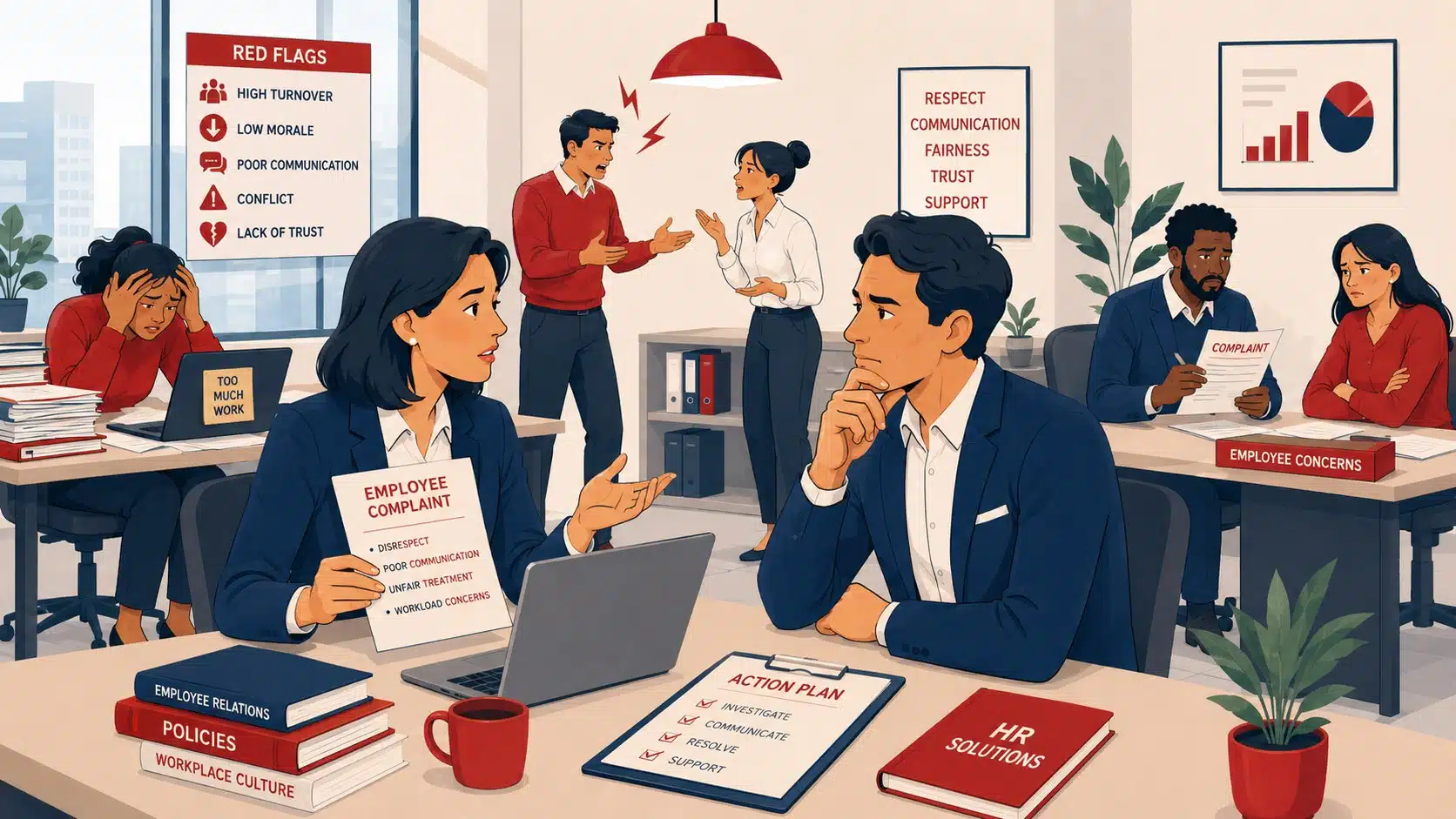
They call when a serious employee complaint lands on someone’s desk. When a trusted manager suddenly resigns. When an issue that was supposed to be “handled internally” is most definitely not being handled. Or when the founder realizes they have spent half the week managing employee problems instead of running the business.
By then, what began as a manageable people issue may already be affecting morale, productivity, retention, leadership credibility and, yes, the company’s overall risk.
So, when should leadership bring in third-party HR support?
Before everything is on fire would be the obvious answer.
Yet many organizations wait because they assume outside HR support is only necessary during a crisis. Others believe that having one internal HR employee means they should never need external help.
Neither assumption is true.
Third-party HR support can supplement an existing HR team, provide temporary leadership, manage a specialized project, conduct an independent investigation or give executives the objective advice they are not receiving internally.
For founders and senior leaders, the real question is not simply, “Do we have HR?”
The better question is:
Do we have the HR capacity, expertise, independence and strategic guidance our organization needs right now?
Here are 10 signs the answer may be no.
Quick Self-Assessment: Does Your Company Need Outside HR Support?
- Have employee complaints increased?
- Are managers spending more time dealing with people issues?
- Are your policies overdue for a proper review?
- Is leadership handling routine HR matters that should be delegated?
- Would your organization know exactly what to do if a workplace harassment complaint was received tomorrow?
If you answered yes to two or more of these questions, it may be time to consider external HR support.
Why Companies Wait Too Long to Get Outside HR Support
Many businesses begin with informal HR practices.
The founder handles hiring. A department manager deals with performance concerns. Finance maintains employee records. An office manager becomes the unofficial HR contact because someone has to do it.
This may work for a while.
Then the company grows. More people are hired. New managers are promoted. Employees begin working in different provinces. Workplace expectations become more complicated. The same informal practices that once felt flexible begin producing inconsistency, confusion and risk.
Even established companies with internal HR teams can reach a point where outside support is necessary. The team may be overloaded, missing specialized expertise or simply too close to a situation to provide the independence employees and leadership need.
Waiting until an issue becomes urgent usually leaves the organization with fewer options. It also tends to make the eventual response more expensive, disruptive and emotionally charged.
Proactive HR support gives leaders time to think, plan and act before a manageable problem turns into a workplace crisis.
1. HR Management Is Taking Too Much of Leadership’s Time
Founders and executives should understand what is happening in their workforce. They should not, however, have to personally manage every attendance issue, accommodation request, employee conflict, policy question and performance concern.
When senior leaders spend a growing portion of their week dealing with routine HR matters, the organization may have outgrown its current approach.
You may notice that:
- Managers escalate every difficult conversation to the founder.
- Employee issues repeatedly interrupt strategic work.
- Decisions are delayed because no one knows who owns the HR process.
- Documentation is completed inconsistently, if at all.
- Concerns remain unresolved because leadership is simply too busy.
This is often when executives tell themselves, “It is only a few hours a week.”
It rarely stays that way.
Recent data suggests this pressure is already affecting many leaders. According to Statistics Canada’s 2024–2025 Canadian Survey on Working Conditions, 34.6% of managers reported completing unpaid work in their free time several times a month or more to meet their job demands.
That is not simply a work-life balance statistic. It is a leadership-capacity warning.
People issues have a habit of snowballing. A minor performance concern becomes a conflict. The conflict becomes a complaint. The complaint becomes a resignation, a legal letter or an organizational mess that consumes far more time than early intervention would have required.
Ongoing or interim HR support can provide managers with a reliable source of guidance while allowing senior leaders to return their attention to strategy, operations, clients and growth.
The company does not necessarily need to choose between hiring a full internal department and having no HR support at all. As discussed in HR Consultants vs. In-House HR Teams, many organizations benefit from using internal and external resources together.
2. You Need Ongoing HR Support but Not Another Full-Time Hire
Not every organization needs another permanent HR employee.
It may, however, need someone who can answer managers’ questions, review difficult decisions, help update policies, support employee relations and step in before a problem escalates.
This is especially common in small and mid-sized businesses. The company has become too large and complicated for informal HR management, but the workload may not justify another full-time salary.
There is a middle ground.
Ongoing external HR support can give an organization access to experienced guidance without requiring it to build an entire internal function overnight.
Depending on the organization’s size and needs, this support may be structured as a Fractional CHRO, Fractional HR Executive, Outsourced HR Director or another form of Interim HR Leadership. The title may differ, but the objective is the same: provide senior-level HR expertise in a flexible model that fits the organization.
This may include:
- Regular support for executives and managers
- Employee relations advice
- Performance management guidance
- Policy development and interpretation
- Documentation support
- Assistance with accommodations, leaves and attendance
- Strategic workforce planning
- Support during difficult organizational decisions
A retained advisor also develops familiarity with the company over time. This matters. HR advice is more useful when the advisor understands the organization’s history, leadership style, workforce and operational realities.
For companies that need consistent access to HR expertise, HR retainer packages can provide a practical alternative to waiting for the next emergency.
3. Your Policies and Practices Need an HR Audit
When was the last time someone reviewed your HR policies, files, procedures and management practices?
Not skimmed them.
Not changed the date on the cover page.
Actually reviewed them.
Policies that worked when a company had 15 employees may be completely inadequate when it has 50, 100 or 500. The organization may have introduced remote work, expanded into another province or added several management levels without updating the systems that support those changes.
An HR audit can examine areas such as:
- Recruitment and onboarding
- Employment agreements
- Employee classifications
- Workplace violence and harassment policies
- Attendance and leave practices
- Accessibility and accommodation processes
- Performance management
- Discipline and termination procedures
- Employee records
- Remote and hybrid work
- Compensation and promotion practices
- Manager training
- Compliance responsibilities
The purpose is not to hunt for minor administrative mistakes or make leadership feel as though it has failed.
The purpose is to find problems before employees, regulators, lawyers or a serious workplace incident find them for you.
Employer obligations surrounding workplace harassment, violence, psychological health and respectful workplaces also continue to evolve across Canadian jurisdictions. The Canadian Centre for Occupational Health and Safety notes that employers have responsibilities to protect workers’ physical and psychological health, although the specific legislative requirements vary across Canada.
This does not mean every executive needs to become an employment lawyer. It does mean organizations need current policies, clear processes and access to qualified guidance before an issue arises.
An HR audit or organizational review can help leadership identify gaps and determine whether the organization’s current people practices reflect its size, structure, culture and obligations.
For a deeper look at the process, see When and Why Should You Conduct an HR Audit?.
4. Employee Complaints Are Becoming More Frequent or Serious
Conflicts happen in every workplace. Employees will disagree. Managers will make mistakes. Personalities will clash.
That does not automatically mean the organization has a major cultural problem.
But when complaints become more frequent, more serious or suspiciously similar, leadership should pay attention.
Warning signs can include:
- Several complaints involving the same manager
- Allegations of bullying, harassment, discrimination or retaliation
- Employees bypassing managers because they do not trust the internal process
- Complaints remaining unresolved for long periods
- Employees resigning shortly after raising concerns
- Inconsistent accounts of how previous complaints were handled
- Managers attempting to investigate serious allegations on their own
The last point deserves emphasis.
A manager asking a few questions is not always an investigation. Nor should the accused employee’s direct supervisor automatically become the investigator simply because they are available.
Some issues can be resolved through coaching, mediation, clarification or an informal process. Others require a structured response.
Leadership needs to know the difference.
Psychological Safety Matters
Psychological safety is not about making every workplace conversation comfortable, eliminating accountability or ensuring that no one’s feelings are ever challenged.
It means employees feel able to ask questions, admit mistakes, offer ideas and raise concerns without fearing damage to their job, reputation or career.
According to Gallup’s latest Canada workplace data, only 21% of Canadian employees were engaged at work, while 58% reported experiencing significant stress during the previous day.
Those figures should concern any executive who assumes that employee silence means everything is fine.
The Canadian Centre for Occupational Health and Safety connects psychological protection with job satisfaction, team learning, performance, morale and employee engagement. Psychologically protected workplaces may also experience fewer grievances and conflicts.
When employees feel safe speaking up, leadership has a better chance of learning about a problem while it is still manageable. When they do not, concerns tend to remain hidden until they emerge as formal complaints, resignations, conflict or reputational damage.
A quiet workplace is not necessarily a healthy workplace. Sometimes, it is simply a workplace where employees have learned that speaking up is not worth the risk.
Our article When Does a Workplace Complaint Require a Formal Investigation? can help employers assess when a concern has moved beyond ordinary workplace conflict.
5. A Complaint Requires an Independent Workplace Investigator
There are situations where an internal investigation may be appropriate.
There are also situations where it is not.
A serious allegation may require an independent workplace investigator who is separate from the people, relationships and internal politics surrounding the complaint.
Third-party workplace investigations may be appropriate when:
- The allegations involve harassment, discrimination, violence or serious misconduct.
- The facts are disputed.
- The parties do not trust the internal process.
- The organization lacks investigation experience.
- The matter could create significant legal or reputational risk.
- The internal HR team has a conflict of interest.
- Senior leadership wants an objective assessment of what occurred.
An outside investigator can interview the relevant parties, review documents and other evidence, assess credibility and produce findings through a structured process.
Independence is not merely about hiring someone with a different email address.
The investigator must also be able to approach the evidence without pressure to protect a particular executive, department, employee or desired outcome.
That can be uncomfortable for leadership. It is also the point.
A credible investigation should determine what happened, not validate what someone hopes happened.
For more information, see Investigating Workplace Harassment: Why Bring in a Third-Party Investigator?.
6. The Complaint Involves Management or the HR Team
What happens when the person accused of misconduct is the person who normally handles workplace complaints?
This is where internal processes can fall apart very quickly.
Employees may be reluctant to report concerns involving:
- A founder or owner
- A senior executive
- A board member
- The head of HR
- A highly influential manager
- A major revenue generator
- Someone with authority over the internal investigator
Even a highly capable HR professional may face an actual or perceived conflict of interest.
Can an HR manager objectively investigate the executive who controls their compensation, promotion or continued employment?
Perhaps.
Will employees believe the process is independent?
That is a different question.
External HR support creates separation between the complaint and the people with a stake in its outcome. It can protect the integrity of the process while allowing the internal HR team to continue supporting the organization.
These situations require care, sound judgment and, frankly, a willingness to resist the instinct to protect powerful people simply because they are powerful.
Our article Handling a Serious Complaint Involving Management or the HR Team explores these challenges in greater detail.
7. Rapid Growth or Restructuring Requires Change Management Support
Growth is exciting.
It can also expose every weakness in an organization’s structure, communication and leadership.
A company may need change management consulting when it is:
- Hiring rapidly
- Opening new locations
- Expanding into another province
- Introducing new management layers
- Restructuring departments
- Completing a merger or acquisition
- Moving to remote or hybrid work
- Implementing new technology
- Changing its operating model
- Reducing or reorganizing its workforce
Executives tend to experience organizational change differently than employees.
Leadership may see a strategic decision, a more efficient structure or an opportunity for growth.
Employees may see uncertainty.
Will my job still exist? Who will I report to? Why was this decision made? Does leadership know what it is doing? Should I start looking elsewhere?
Silence does not make these questions disappear. It simply allows rumors to answer them.
Effective HR change management helps leaders assess the human impact of a business decision, communicate clearly, prepare managers and support employees through the transition.
HR should not be brought in after every important decision has already been made. Involving HR early can help leadership identify workforce risks and develop an implementation plan that works in the real world, not only in a boardroom presentation.
Learn more in Why HR Plays a Critical Role in Ensuring a Positive Change Management Experience.
8. Managers Need HR Guidance, Training or Executive Coaching
Here is an uncomfortable truth:
Promoting your best salesperson, engineer, clinician, administrator or operations employee does not magically turn that person into an effective people manager.
They may be exceptional at their job.
Managing performance concerns, workplace conflict, accommodations, employee complaints and difficult personalities is another matter entirely.
Yet companies do this all the time. They promote someone, give them a new title, perhaps provide a two-hour management webinar, and then wonder why the team is struggling six months later.
Managers may need support with:
- Delivering honest and constructive feedback
- Setting expectations
- Documenting performance concerns
- Managing interpersonal conflict
- Addressing inappropriate behavior
- Recognizing issues that require HR involvement
- Responding to employee complaints
- Managing remote or hybrid teams
- Supporting employee development
- Making fair and consistent decisions
Avoiding difficult conversations does not make a manager kind. It usually allows the problem to become worse.
At the same time, acting too quickly without proper guidance can create a different set of problems.
The influence managers have over their teams is difficult to overstate. Gallup continues to report that managers account for approximately 70% of the variance in team engagement.
Seventy percent.
That figure should get the attention of any organization that promotes managers without preparing, supporting or holding them accountable for how they lead people.
Third-party HR support gives managers access to advice before they take action. Executive business coaching and customized management training can also help senior leaders strengthen their communication, judgment, self-awareness and accountability.
Poor management affects more than the employee directly involved. It influences engagement, retention, productivity, culture and the organization’s reputation.
The article The Impact of Bad Managers: How to Foster Effective Leadership and Boost Business examines those wider consequences.
9. Your Internal HR Team Needs Interim or Specialized Support
Having an internal HR team does not mean the organization should never need outside expertise.
That is a bit like saying a company with an accountant should never need an auditor, tax specialist or financial advisor.
Internal HR teams are often responsible for recruitment, employee relations, payroll coordination, benefits, policies, compliance, training, reporting, performance management and an endless stream of management questions.
Then something unusual happens.
A major investigation begins. The organization restructures. An HR leader takes an extended leave. The company expands rapidly. A new system must be implemented. Employee conflict suddenly increases.
The team may need additional capacity, specialized expertise or an independent perspective.
Technology is also changing how HR work is completed. While AI is transforming many administrative aspects of HR, including policy drafting, documentation and analytics, it cannot replace experienced human judgment when managing employee relations, workplace investigations or complex leadership decisions.
An AI tool can generate a template in seconds, but it cannot fully understand an organization’s history, assess credibility, read the dynamics in a difficult conversation or navigate a sensitive human situation with fairness and care.
Interim HR support and management services can help during:
- Leadership vacancies
- Extended employee leaves
- Rapid growth
- Major HR projects
- Policy overhauls
- Workplace investigations
- Restructuring
- Mergers and acquisitions
- Periods of increased employee relations activity
- HR department transitions
Bringing in help should not be viewed as a failure of the internal team.
In fact, experienced HR leaders usually know when a situation requires skills, time or independence that the organization does not currently have.
Pretending the team can absorb unlimited work is not resilience. It is usually how good HR professionals become exhausted and leave.
10. Turnover, Disengagement and Workplace Conflict Are Increasing
Employees do not always tell senior leadership why they are unhappy.
They may stop contributing ideas. They may become quieter in meetings. They may take more sick days, turn down opportunities or do only what is necessary to get through the week.
Eventually, they may resign.
By the time the resignation letter arrives, the underlying issue may have existed for months.
Leadership should pay attention to:
- Rising voluntary turnover
- Repeated departures from one department
- Difficulty retaining high performers
- Increased absenteeism
- Persistent workplace conflict
- Declining participation in meetings
- Poor employee survey results
- Negative employer reviews
- Employees refusing promotions
- Growing complaints about workload, fairness or management
Turnover intentions are not hypothetical. In January 2026, Statistics Canada reported that 7.1% of permanent employees between the ages of 15 and 69 planned to leave their job within the following 12 months.
Across Canada, that represents a significant number of employees reconsidering their relationship with their employer. Within one organization, even a handful of avoidable departures can disrupt operations, weaken teams and create substantial recruitment and training costs.
One departure may be personal.
Five departures from the same team may be a pattern.
An outside HR advisor can help leadership examine turnover data, management practices, employee feedback, organizational structure and workplace culture without defending the status quo.
The goal is not to prevent every employee from leaving. Some turnover is normal and, occasionally, beneficial.
The goal is to determine whether avoidable workplace conditions are pushing good employees out the door.
Retention is connected to leadership, communication, recognition, fairness, development opportunities, workload, compensation and trust. For additional context, see Employee Retention and Engagement During the Great Resignation.
What Happens When HR Warning Signs Are Ignored?
HR problems rarely remain neatly contained.
An unresolved management issue can lead to turnover.
Inconsistent discipline can become a formal complaint.
An outdated policy can create confusion during a serious incident.
A poorly managed restructuring can damage trust long after the new organizational chart has been approved.
When warning signs are ignored, companies may face:
- Increased compliance and legal risk
- Loss of high-performing employees
- Lower productivity
- Reduced employee trust
- Leadership burnout
- Reputational damage
- Higher recruitment and training costs
- Escalating workplace conflict
- Poor customer service
- Difficulty implementing strategic change
The cost is not limited to legal fees or settlements.
It includes management time, vacancies, absenteeism, disrupted teams, delayed projects and the loss of people the company may have spent years developing.
Proactive HR support is usually less expensive and far less disruptive than trying to repair the damage after the problem becomes a crisis.
What Can Third-Party HR Support Include?
Third-party HR support does not have to mean outsourcing the entire HR function.
The right approach depends on the organization’s size, workforce, internal resources and objectives.
Support may include:
- Ongoing HR advice for executives and managers
- Fractional CHRO or Fractional HR Executive support
- Outsourced HR Director services
- Interim HR leadership
- Independent workplace investigations
- HR audits and organizational reviews
- Policy development
- Employee relations support
- Performance management guidance
- Executive coaching
- Management training
- Change management support
- Organizational design
- Workforce planning
- Recruitment strategy
- Support during restructuring or expansion
Some companies need help with one specific issue.
Others benefit from ongoing access to an advisor who already understands the business and can become involved before concerns escalate.
Nonprofits and charities can face additional challenges, including limited internal capacity, complex board relationships, funding restrictions and pressure to focus every available resource on the mission.
Specialized HR consulting for nonprofit organizations can help these organizations develop practical HR systems without importing a bloated corporate model that does not fit their reality.
The broader shift toward flexible HR models is explored in Is Outsourcing the Future of HR?.
When Should Your Company Bring in an External HR Advisor?
Needing third-party HR support does not mean the organization has failed.
It may mean the company has grown.
It may mean the workforce has become more complex.
It may mean the internal team needs more capacity.
Or it may mean leadership has recognized that a sensitive issue requires expertise and independence.
That recognition is a strength, not a weakness.
The strongest organizations do not wait until every workplace concern becomes an emergency. They identify gaps, ask difficult questions and bring in the right expertise before the situation spirals.
If several of these signs feel familiar, your current HR structure may no longer be keeping pace with the needs of the organization.
Supporting Organizations Across Canadian Sectors
HR challenges do not belong to one industry. They may look different depending on the workforce, operating environment and organizational structure, but the need for fair processes, effective leadership and sound human judgment remains the same.
TSERGAS Human Capital supports growing Canadian businesses and organizations across sectors including:
- Nonprofits and charities
- Manufacturing
- Professional services
- Logistics and transportation
- Technology
- Healthcare
- Growing Canadian businesses across other sectors
Does Your Organization Need Third-Party HR Support?
TSERGAS Human Capital provides customized HR consulting, independent workplace investigations, HR audits, organizational reviews, fractional and interim HR leadership, change management and leadership development services to organizations across Canada.
Contact TSERGAS Human Capital at 416-788-8069 or info@tsergas.ca to discuss the type of third-party HR support that best fits your organization.